
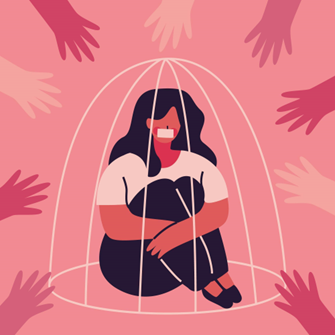
Cringe Culture: How youth are missing out in fear of being judged
In a recent interview with ABC News, professor and author Ocean Vuong discusses how ‘cringe culture’ has become a subtle but powerful form of social policing. What once served as a humorous way to bond over shared awkwardness has evolved into a practice that shames sincerity, mocks earnestness and discourages individuality. Vuong observes that many of his students have become increasingly “self-conscious of trying,” often stifling their creativity and interests for fear of being mocked.
This reluctance to show passion isn’t happening within a vacuum. Under the constant surveillance state of social media, young people now operate in what feels like a digital panopticon — constantly putting on an act, not because someone is watching, but because someone could be.
In this climate, many young people shy away from vulnerability or appearing too eager, preferring to give the impression that their success came effortlessly. “There’s this immense desire for sincerity … but people want to arrive at it without being vulnerable,” says Vuong.
Besides sincerity, cringe culture also dismisses curiosity, learning and enthusiasm as ‘try-hard’ behaviour. When we treat the pursuit of knowledge as something to be ashamed of, we create a society that’s easier to manipulate and control.
Challenging cringe culture begins with transforming how we talk about passion and effort. Rather than seeing risk-taking or unconventional pursuits as embarrassing, we need to embrace and celebrate the bravery it takes to try new things, follow your interests and share the process rather than just the outcome.
This change starts in our daily environments, classrooms, community spaces and online platforms, where young people should feel supported the most to take risks, learn from mistakes and express themselves freely without fear of judgment.
About the author

Ruth Moon Lopez